A costed comparison of the three ways to get online in Morocco: eSIM from €6, pocket WiFi at €4.90/day, and IAM, Inwi and Orange SIM cards. Prices read on 3 September 2026, break-even calculated, real coverage mapped.
There are three ways to get online in Morocco, and the right one depends less on your budget than on how many of you there are and what you plug into it. Here is the short answer, then the arithmetic. All prices read on 3 September 2026.
| Your situation | What you want | Why |
|---|---|---|
| Solo traveller, 3–10 days | eSIM | Installed before take-off, live on landing. No queue, no passport at a counter. |
| Couple, family, group | Pocket WiFi | One flat daily price whatever the number of phones. From two travellers up it beats two eSIMs. |
| Laptop, tablet, working remotely | Pocket WiFi | A real Wi-Fi network. No tethering that flattens your phone battery by lunchtime. |
| Long stay, tight budget, one phone | Local SIM | Cheapest in pure cash terms. It costs you arrival time and your passport. |
| 24-hour stopover | 1-day eSIM | €6 and it is settled. A local SIM never pays for itself in a day. |
Three things to settle before you fly
Most guides open by comparing bundles. They skip the three constraints that actually decide your choice — and that cannot be fixed once you have landed.
1. The dirham is a closed currency: you land with none of it
The Moroccan dirham (MAD) cannot be bought abroad and cannot be sold back: it is a closed currency, with a legal limit of 2,000 MAD leaving the country. In practice you arrive without a single dirham. For a local SIM that means either an ATM or a bureau de change before the counter, or a kiosk that takes cards — the three shops at Casablanca airport do, accepting Visa, Mastercard, euros, dollars or dirhams. An eSIM or a pocket WiFi is paid online, before departure, in your own currency. Our Morocco money guide covers rates and exchange offices.
2. A local SIM needs your passport, in person, at the counter
Moroccan regulation requires every SIM to be registered to an identified person against an identity document. For a foreigner that is your passport, shown physically at the point of sale, with the registration done by the seller. The practical consequence nobody spells out: you cannot buy a Moroccan SIM before you arrive, and you cannot buy one online from home. Be wary of pre-activated cards sold outside official shops: they are registered to somebody else and can be cut off without notice.
3. Morocco is outside the EU “roam like at home” zone
Morocco is outside the European Union and the EEA, so EU roaming rules do not apply. Your French, Spanish, German or British plan switches to international rates here. UK carriers advertise daily passes around £8 a day, and off-pass rates run into tens of euros for a few hundred megabytes. It is the most expensive of the four options, and it is the default if you do nothing.
Option 1 — eSIM: online before you reach baggage claim
An eSIM is a software SIM: you scan a QR code, a second plan installs alongside your usual line, and it activates the first time it sees a Moroccan network. Nothing to collect, nothing to give back. For a solo traveller it is the simplest option on the market.
Prices read on 3 September 2026 at eSIM Maroc, the unlimited eSIM for Morocco:
| Duration | Price | Cost per day |
|---|---|---|
| 1 day | €6 | €6.00 |
| 3 days | €14 | €4.67 |
| 5 days | €19 | €3.80 |
| 7 days | €24 | €3.43 |
| 10 days | €32 | €3.20 |
| 15 days | €45 | €3.00 |
| 30 days | €79 | €2.63 |
What it fixes, and what it does not
- Your usual number stays live for bank SMS codes and WhatsApp.
- The plan starts on your first connection in Morocco, not at purchase — install it calmly the night before.
- Instant delivery, including at midnight or on a Sunday. There is no shop to open.
- You need a compatible, unlocked phone. In practice: iPhone XS and newer (except mainland-China models, which have no eSIM), Google Pixel 3 and newer, Samsung Galaxy S20 and newer — but some carrier variants ship with eSIM disabled. Check before you buy, not at the airport.
- It connects one phone, not a group. A laptop or tablet has to tether, which drains the phone in a few hours.
- The price multiplies by the number of travellers. Four people, seven days, is four plans.
Installing an eSIM in three steps
- Buy before departure; the QR code arrives by e-mail within seconds.
- Settings → Mobile Data → Add eSIM / Add Data Plan, then scan the code. Do it on your home Wi-Fi, not at the airport.
- On landing, turn mobile data on for the eSIM line and leave data off on your usual line. That single setting is what prevents a roaming bill.
Option 2 — Pocket WiFi: a private network for the whole group
A pocket WiFi is a small battery-powered 4G router: it holds the SIM and broadcasts a Wi-Fi network everyone joins. It is the only one of the three that connects a laptop, a tablet, an e-reader or a Wi-Fi camera directly, without a phone in the middle.
At Pocket WiFi Morocco, pocket WiFi rental in Morocco, the price read on 3 September 2026 is €4.90 per day including VAT, two days minimum, unlimited 4G data with no throttling, up to 10 devices at once, free delivery and collection in Marrakech between 08:00 and 20:00 (09:00–15:30 during Ramadan). A power bank rents for €1.90/day and a car mount for €0.90/day.
The break-even point, calculated
This is the sum comparison articles never do. Over a seven-day trip the pocket WiFi costs €34.30 in total, whatever the number of people. The eSIM costs €24 per person. The cheapest local SIM (Inwi, 100 MAD for 7 unlimited days) works out at roughly €9.24 per person.
| 7 days | 1 traveller | 2 travellers | 4 travellers |
|---|---|---|---|
| Pocket WiFi (total) | €34.30 | €34.30 | €34.30 |
| eSIM (total) | €24 | €48 | €96 |
| Local Inwi SIM (total) | ≈ €9.24 | ≈ €18.48 | ≈ €36.96 |
| Cheapest | Local SIM | Local SIM, then pocket WiFi | Local SIM ≈ pocket WiFi |
The honest verdict: in pure cash, the local SIM almost always wins. A pocket WiFi does not buy the best price, it buys a fixed price, sharing and zero friction. An eSIM buys neither: it buys the time you do not spend in a queue.
Option 3 — The local SIM: Maroc Telecom, Inwi or Orange
Three operators share the country: Maroc Telecom (IAM), Inwi and Orange Maroc. All three sell prepaid packs aimed at tourists, all three require a passport, and all three are present in the international airports and in every city.
| Operator | Price range read (Sept 2026) | What it is known for |
|---|---|---|
| Maroc Telecom (IAM) | 119 MAD ≈ €11 for 29 GB · 199 MAD ≈ €18.4 for 50 GB · 259 MAD ≈ €23.9 for 65 GB | The oldest rural footprint: pistes, Atlas valleys, small villages. |
| Inwi | 100 MAD ≈ €9.2 unlimited 7 days · 200 MAD ≈ €18.5 unlimited 14 days · 500 MAD ≈ €46.2 unlimited 30 days | The most data per dirham, and genuinely unlimited short-duration packs. |
| Orange Maroc | From 100–120 MAD ≈ €9.2–11.1 (Marhaba offer), social apps included for 30 days | Fast 4G/5G in cities, and the network most international eSIMs ride on. |
Where to actually buy one
- At the airport. At Casablanca Mohammed V the three operators run shops open 24 hours that accept Visa, Mastercard, euros, dollars and dirhams. It is the one point of sale that solves the closed-currency problem without a trip to an ATM first.
- In an official city store. Marrakech, Fès, Agadir, Tangier: IAM, Inwi and Orange branches register you in a few minutes. Allow for Friday midday closing and reduced hours during Ramadan.
- Not on the street. A pre-activated card sold without a passport is registered to someone else — illegal for the seller and unstable for you.
Topping up and checking your balance
You top up with scratch cards sold everywhere — grocers, kiosks, petrol stations — or in the operator's app. Two codes worth writing down before you fly: #580# for a Maroc Telecom balance, #554# for an Orange balance. Dial them like a phone number; the answer is instant and free.
What a local SIM really costs you
- Time on arrival. Queue, registration, activation: allow 15 to 40 minutes after a flight, with luggage, and sometimes a driver waiting.
- Your own number. On a single-SIM phone you take your card out — and the SMS codes from your bank, your e-mail and your payment apps start going to a card that is no longer in the phone. It is the classic travel trap: check you can log in another way before you pull your SIM.
- A bounded “unlimited”. Prepaid unlimited packs run under a fair-use policy, and hotspot sharing is not always included. Ask specifically if you meant to connect a laptop.
The full comparison
| Criterion | eSIM | Pocket WiFi | Local SIM | Roaming |
|---|---|---|---|---|
| Price, 7 days, 1 person | €24 | €34.30 | ≈ €9.24 | Very high |
| Price, 7 days, 4 people | €96 | €34.30 | ≈ €36.96 | Very high |
| Ready when? | Before take-off | Delivered in Marrakech | After the queue | Immediately |
| Passport required | No | No | Yes, in person | No |
| Devices at once | 1 phone | Up to 10 | 1 phone | 1 phone |
| Laptop / tablet | By tethering | Directly over Wi-Fi | By tethering | By tethering |
| Keeps your number | Yes | Yes | No, unless dual-SIM | Yes |
| To give back | Nothing | The router, collected free | Nothing | Nothing |
| Hardware catch | eSIM-capable unlocked phone | A battery to charge every night | A free SIM slot | None |
| The real hidden cost | None | Forgetting the router at the riad | 15–40 min and your security SMS | The bill when you get home |
Real coverage: 5G, 4G and the places where nothing works
Morocco launched 5G on 7 November 2025, simultaneously across all three operators, after ANRT awarded the licences. The initial rollout targeted eight cities and their airports — Casablanca, Rabat, Marrakech, Fès, Agadir, Tangier, Meknès and Oujda — including the six host cities of AFCON 2025. Coverage obligations set for the operators are 45% of the population by 2026 and 85% by 2030. The rest of the country stays on 4G LTE, which is more than enough for anything a traveller does with a phone.
| Where you are | What you get | What to plan for |
|---|---|---|
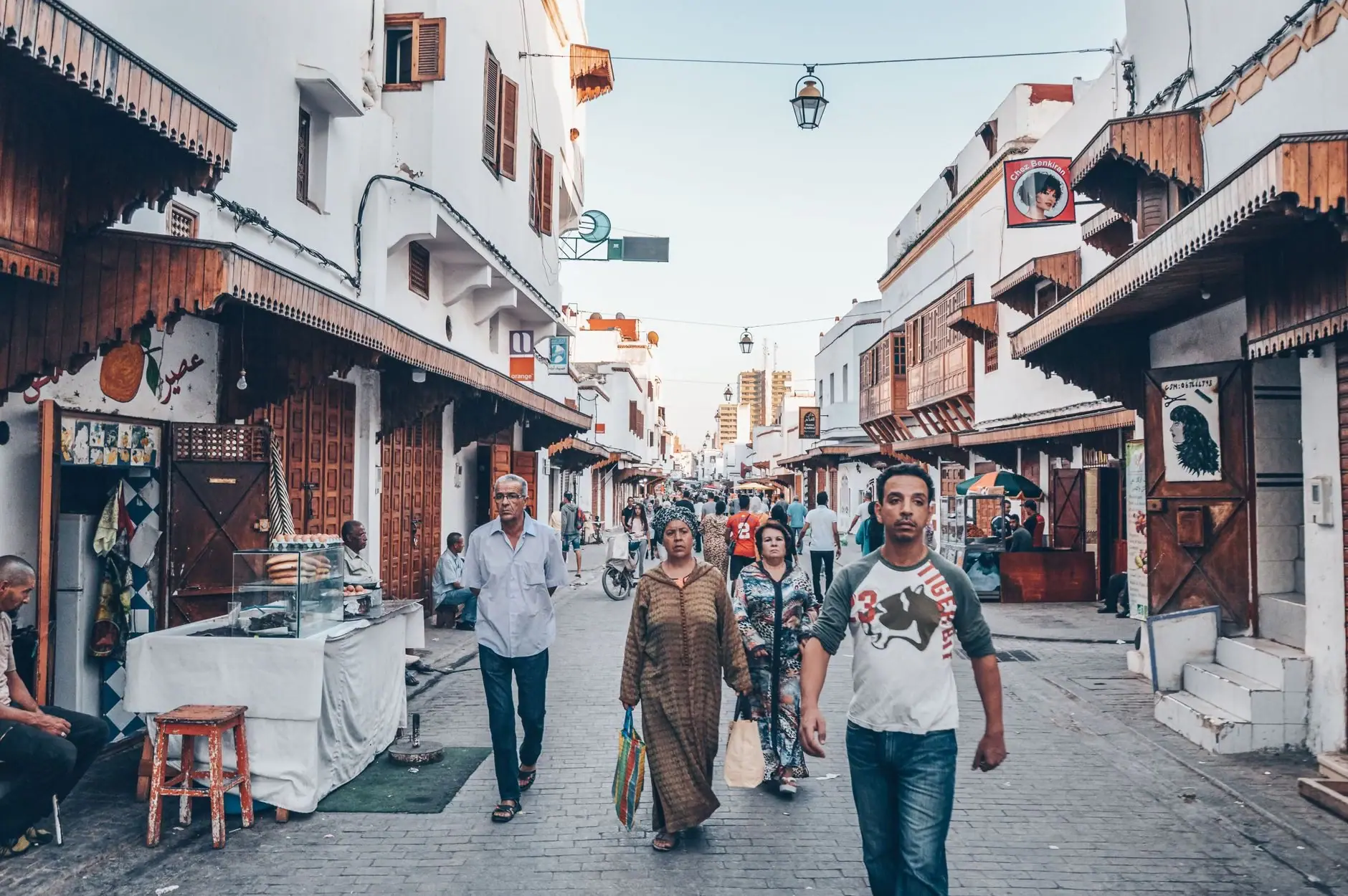
| Marrakech, Casablanca, Fès, Tangier, Agadir, Rabat | 5G, or fast 4G | Nothing in particular. |
| Main roads, Essaouira, Ouarzazate, Chefchaouen | Stable 4G | Nothing in particular. |
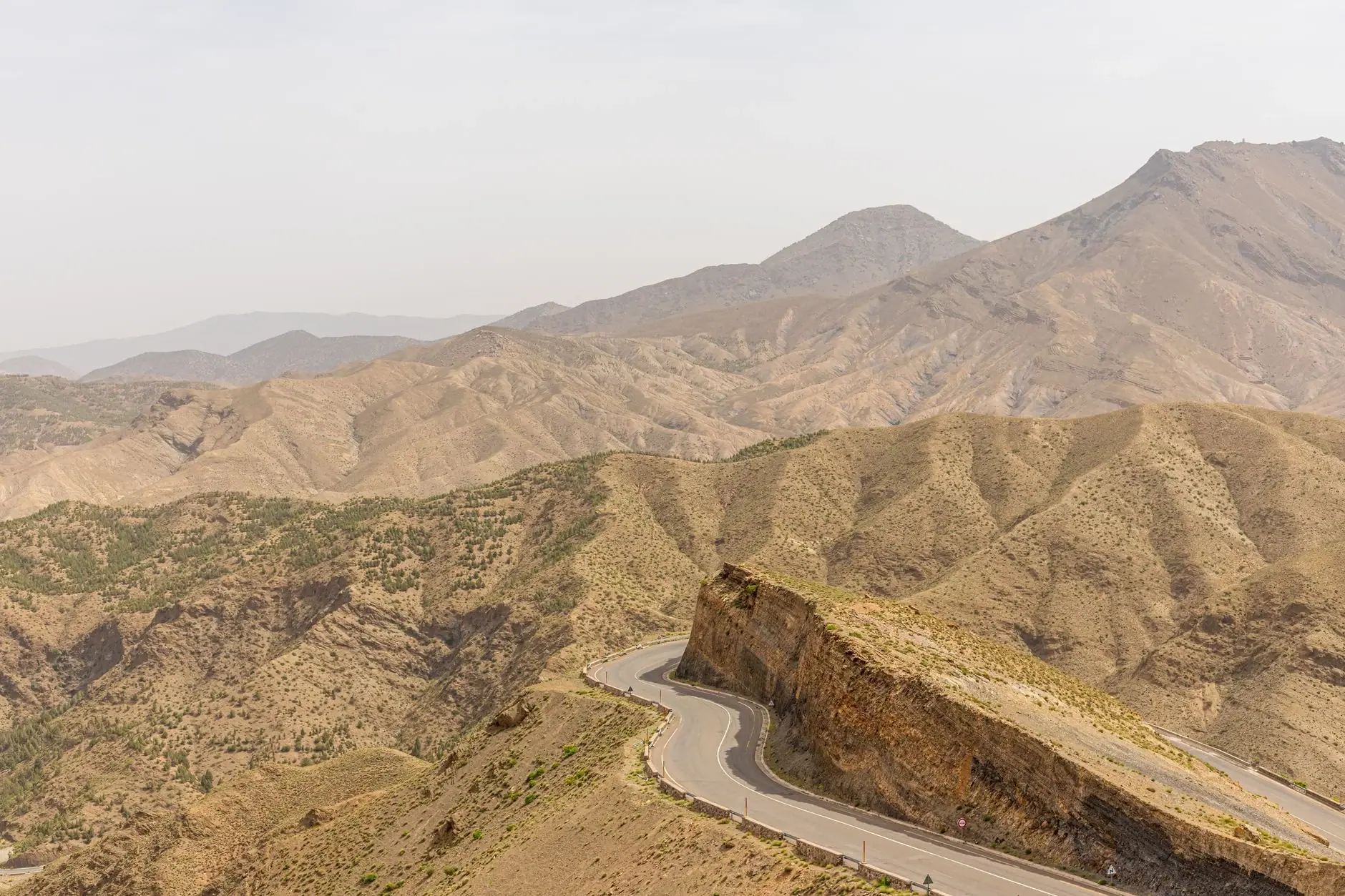
| Atlas valleys, Todra and Dadès gorges | Intermittent 4G, dead spots inside the gorges | Offline maps downloaded before you leave. |
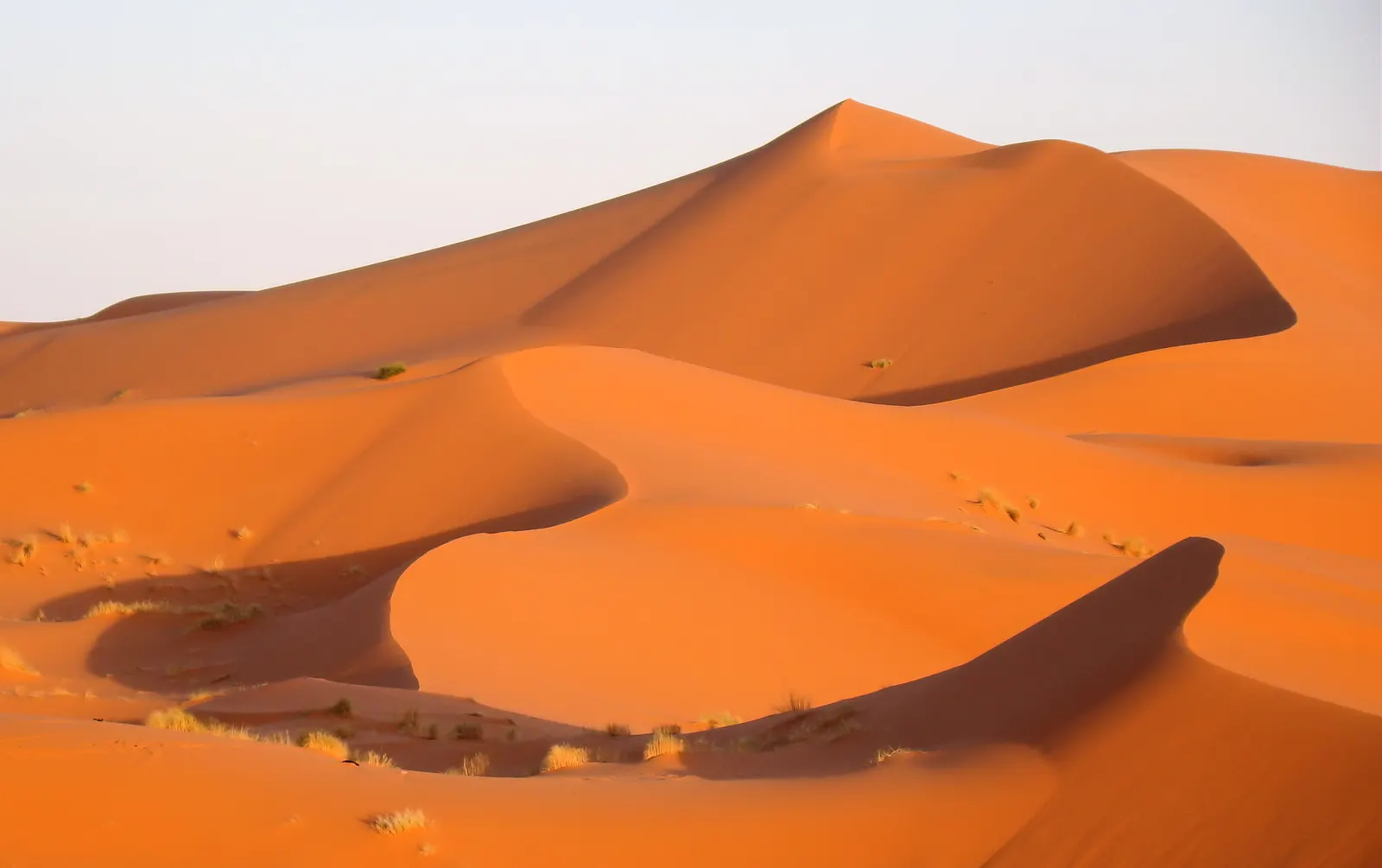
| Erg Chebbi, Erg Chigaga, desert camps | Weak to none depending on the dune | Download everything the night before; power at camp is limited. |
| Toubkal trek, mountain refuges | None over much of the route | Tell people at home before you start walking. |
On our excursions: what actually works
We drive these roads all year. What really changes the comfort of a trip is not the plan you bought, but four things done before you leave the riad's Wi-Fi.
- Download the offline map of the area in Google Maps or Organic Maps the night before.
- Screenshot your accommodation address, in Arabic if you can: it can be shown to a driver with no signal.
- Heading out on the Sahara trip to Merzouga or the Toubkal trek, tell people at home you will be unreachable for part of the day.
- If you rent a pocket WiFi for a multi-day circuit, take the power bank: at a desert camp the generator only runs for a few hours.
For a day trip — Berber dinner in Agafay, the Ouzoud waterfalls, a day in Essaouira — the question barely arises: you have 4G for almost the whole drive. It arises on the desert circuits and on the treks.
So which one should you take?
- Travelling alone, a week or less, with a recent phone. Take an eSIM for Morocco. You walk off the plane connected, you keep your number, and you lose no time at a counter.
- Two or more of you, or travelling with a laptop. Take a pocket WiFi in Marrakech. From the second traveller the flat price wins, and it is the only option that gives the whole group a real Wi-Fi network.
- Staying for weeks and counting every dirham. Take a local SIM from Inwi or Maroc Telecom, with your passport, in an official store. It is the best price on the market — accept the queue.
- You want to do nothing. Then turn data roaming off in settings before you land and live on riad Wi-Fi. It is free, it is frustrating, and it beats the bill.
Frequently asked questions
Is there Wi-Fi in riads and hotels in Morocco?
Yes, almost everywhere, and almost always free. Quality varies a lot: excellent in newer hotels, patchy in old medina riads where thick walls block the signal from room to room. Desert camps sometimes advertise Wi-Fi; treat it as a bonus, not a given.
Can I make WhatsApp calls in Morocco?
App-based calling was blocked in Morocco for a period in 2016, then restored. Today WhatsApp messaging and calls work normally on Moroccan networks. If a call fails it is usually bandwidth, not a block.
Does an eSIM give me a Moroccan phone number?
No. A travel eSIM provides mobile data, not a local line. You keep your own number for SMS. If you need a Moroccan number — to call a riad, a driver or a restaurant back — you need a local SIM card.
Does pocket WiFi work in the desert?
It works exactly where the Moroccan SIM inside it works: very well on the roads and in the towns you stop in, weakly or not at all deep in the erg. No device creates a network where there is no mast.
How much data do I need for a week?
For travel use — maps, messaging, social apps, a few video calls — allow 500 MB to 1 GB per person per day, so 5–10 GB over a week. The market's “unlimited” plans are therefore generously sized; the deciding factor is the number of devices, not the volume.
Should I buy before I leave or once I am there?
eSIM: before — that is the whole point. Pocket WiFi: before, so it is waiting at your Marrakech address. Local SIM: impossible in advance, Moroccan law requires in-person registration with a passport.
Method and sources
- eSIM prices read on esimmaroc.com and pocket WiFi prices read on pocketwifimorocco.com on 3 September 2026.
- Moroccan operator price ranges published in September 2026 by Traveltomtom and Morocco Unfolded; not confirmed with the operators, who publish no stable tourist price list.
- Morocco's 5G launch on 7 November 2025 and the ANRT coverage obligations: official statements from the three operators and November 2025 press coverage.
- Converted at the 3 September 2026 reference rate: €1 = 10.82 MAD.
- Links to Pocket WiFi Morocco and eSIM Maroc carry a tracking parameter (utm) so we can measure the traffic this guide sends them.
Spotted a price that has moved? Write to us and we will correct the page — and we date every reading so you always know how old it is.